|
Mail | LinkedIn | Google Scholar | GitHub | CV Last updated: March 2026 I recently completed my MSc in AI at the University of Amsterdam, where I enjoyed doing research and contributed to several research papers. My thesis developed a local, affordance-centric world model for zero-shot model predictive control in articulated object manipulation, supervised by Dr. Andrii Zadaianchuk and Prof. Efstratios Gavves. I enjoy diving deep into recent advancements in AI while always continuing to solidify my understanding of the fundamentals. Currently, I am also working as an AI Software Developer at LeerLevels, integrating generative AI into the platform. Outside of work, I enjoy hiking, playing squash, and nerding out over Formula 1. I am currently seeking new opportunities as an AI Engineer or AI Research Engineer, so feel free to reach out! |

|
- Freelance: AI Software Developer at LeerLevels.
- Looking for work: Seeking AI Engineer or AI Research Engineer positions.
|
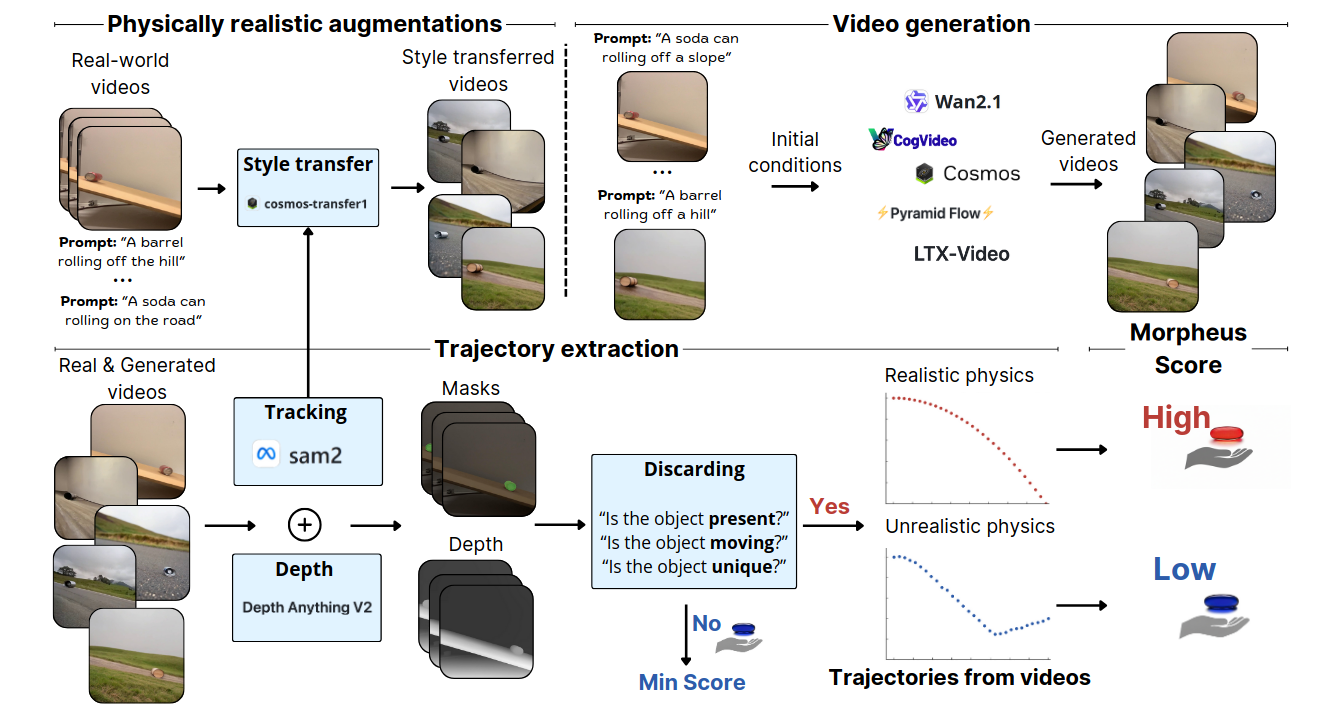
Chenyu Zhang, Daniil Cherniavskii, Antonios Tragoudaras, Antonios Vozikis, Thijmen Nijdam, Derck W. E. Prinzhorn, Mark Bodracska, Nicu Sebe, Andrii Zadaianchuk, Stratis Gavves Under review, 2025 Links: Paper | Website We introduce Morpheus, the first benchmark for evaluating video generation models on physical reasoning using real physical experiments. Our findings reveal that even with advanced prompting and video conditioning, current models struggle to encode physical principles despite generating aesthetically pleasing videos. |
|
|
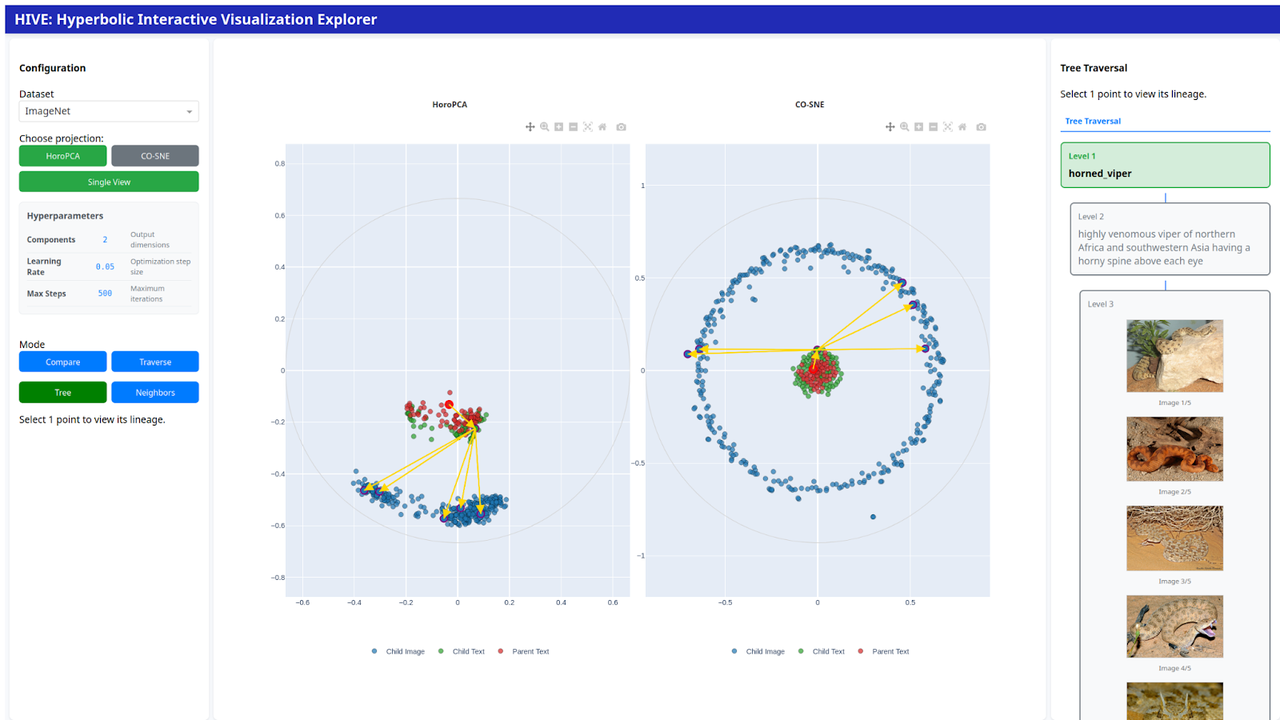
Thijmen Nijdam*, Derck WE Prinzhorn*, Jurgen de Heus*, Thomas Brouwer* 2nd Beyond Euclidean Workshop: Hyperbolic and Hyperspherical Learning for Computer Vision @ ICCV, 2025 Links: Paper | Code In this paper, we introduce HIVE, an interactive dashboard for exploring and interpreting hyperbolic embeddings. It supports several interaction modes and allows switching between two projection methods: CO-SNE and HoroPCA. |
|
|
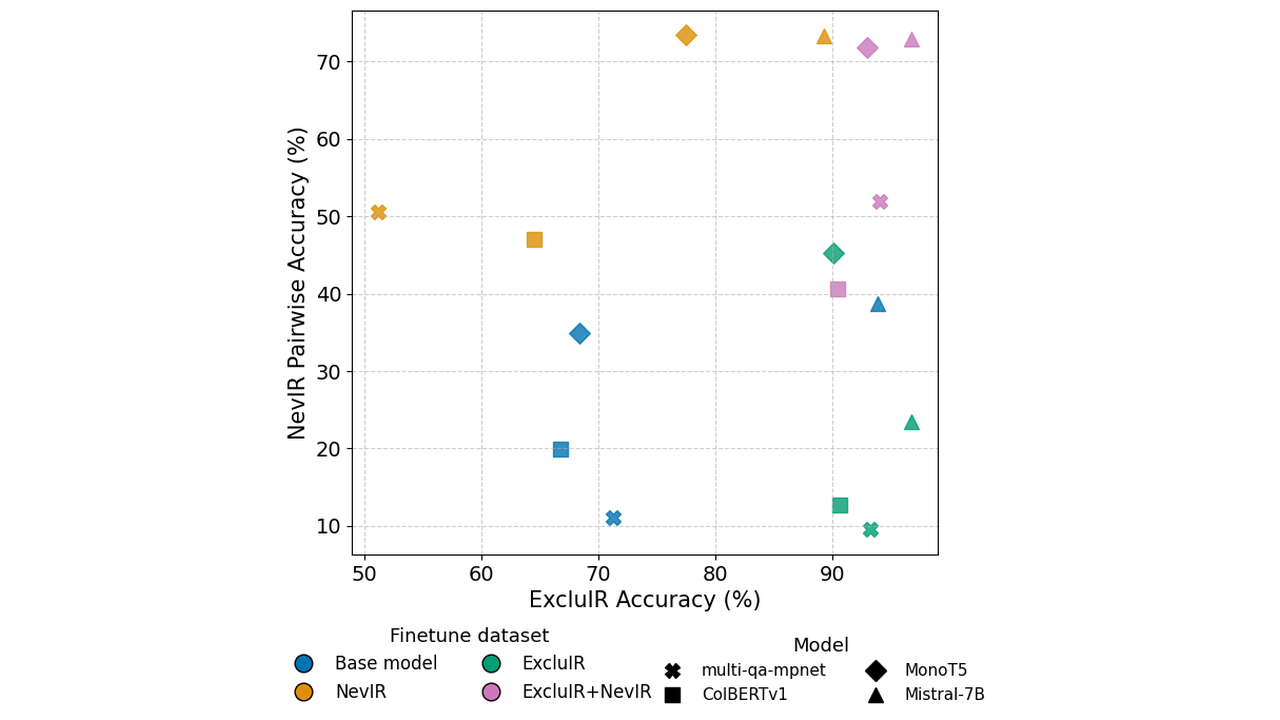
Coen van den Elsen*, Francien Barkhof*, Thijmen Nijdam*, Simon Lupart, Mohammad Aliannejadi Proceedings of the 48th International ACM SIGIR Conference on Research and Development in Information Retrieval, 2025 Links: Paper | Code | Poster In this paper, we reproduce the findings that show that SotA neural IR models struggle with negation, often performing at/or below random ranking baselines. We extend their work by evaluating new SotA models and assessing how well their understanding of negation generalizes across datasets. |
|
|
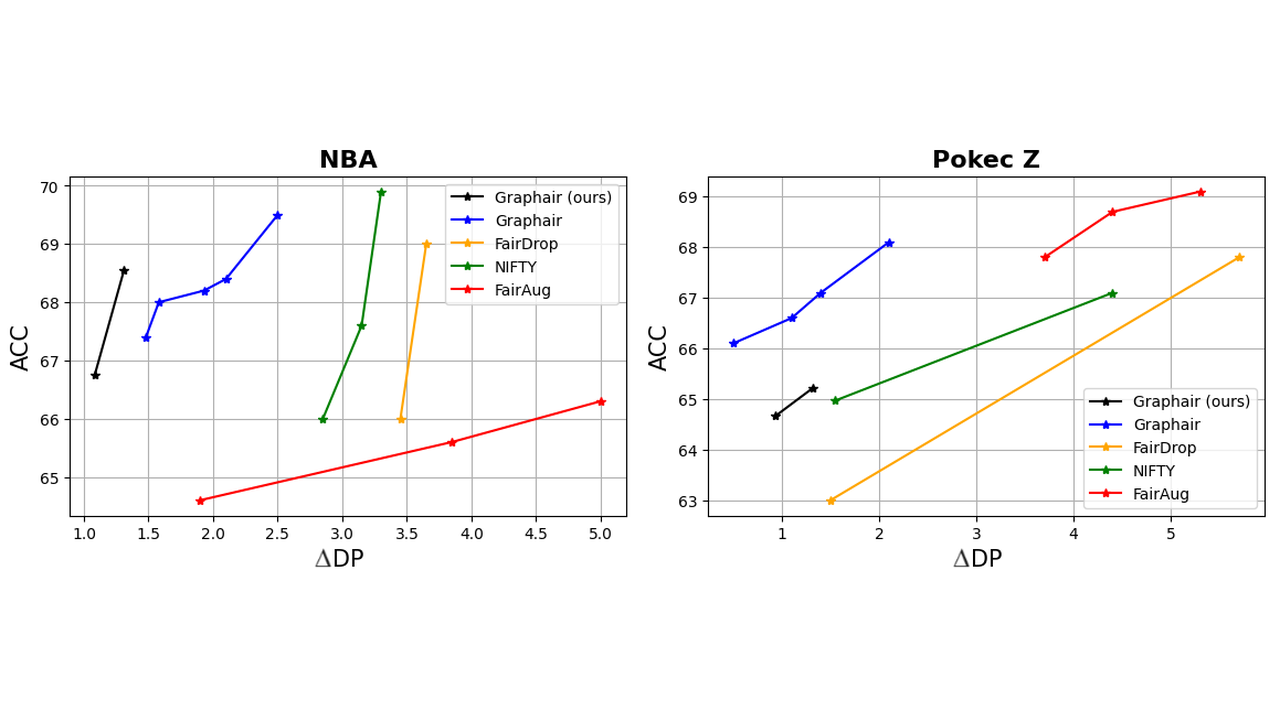
Thijmen Nijdam, Juell Sprott, Taiki Papandreou-Lazos, Jurgen de Heus Transactions on Machine Learning Research (TMLR), 2024 Also: Presented at NeurIPS 2024 as a poster as part of the Machine Learning Reproducibility Challenge (MLRC) Links: Paper | Code | Poster | Slides In this study, we assessed the reproducibility of the paper “Learning Fair Graph Representations Via Automated Data Augmentations”. We were able to partially reproduce one of the claims made by the original authors and fully reproduce the other two. Beyond verifying the original work, we extended the framework to assess its usability for another downstream task, specifically link prediction. We found that it significantly outperforms baselines on one fairness metric, while performing comparably on the other. |
|
|
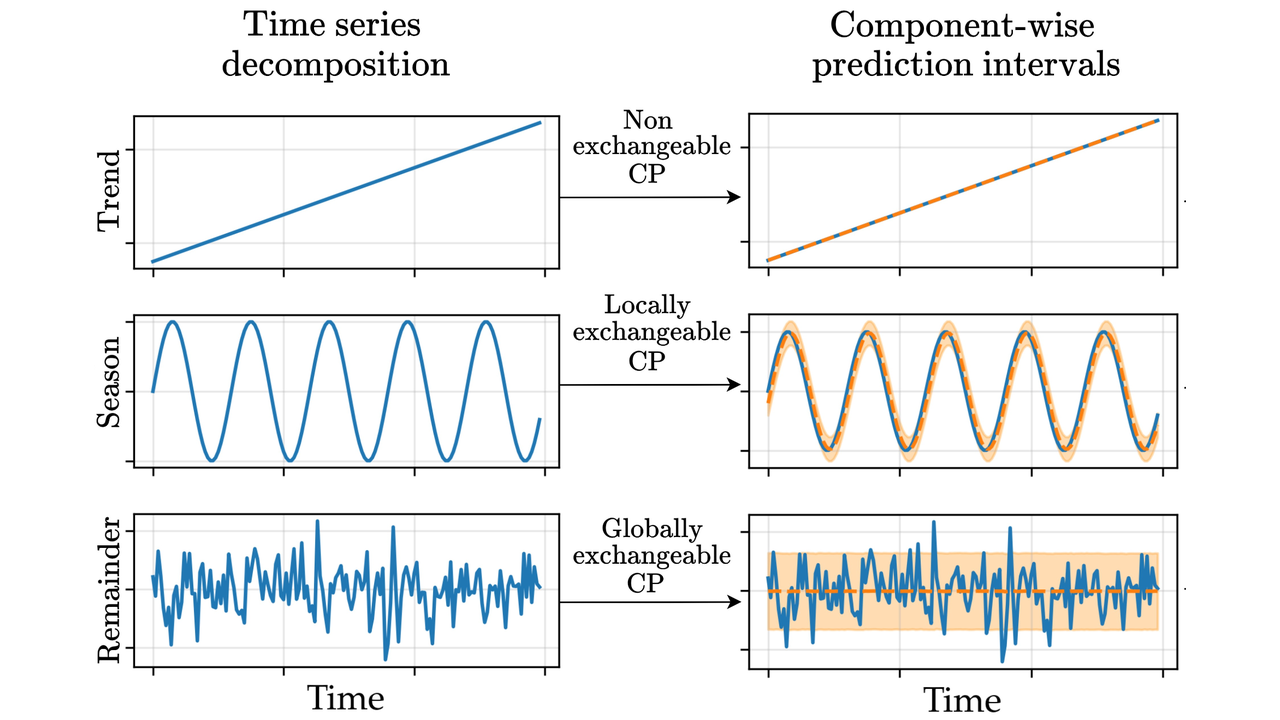
Derck WE Prinzhorn*, Thijmen Nijdam*, Putri A van der Linden, Alexander Timans 13th Symposium on Conformal and Probabilistic Prediction with Applications (COPA), 2024 Links: Paper | Code | Slides We present a novel use of conformal prediction for time series forecasting that incorporates time series decomposition, allowing us to customize employed methods to account for the different exchangeability regimes underlying each time series component. |
|
|
Source: adapted from Alexander Timans' fork of Dharmesh Tailor's fork of Leonid Keselman's fork of John Barron's website. |